
ARTIST STATEMENT
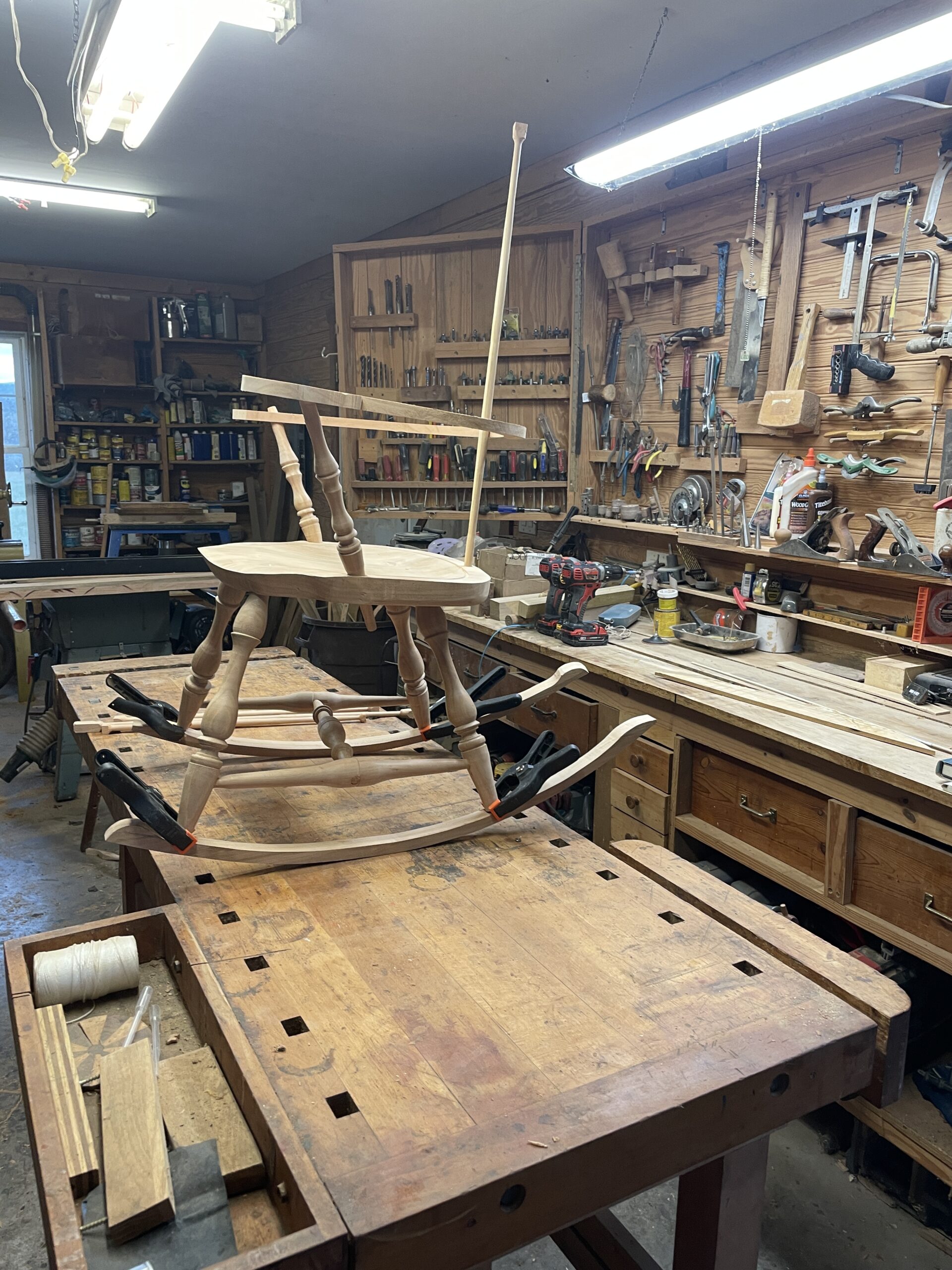
Cherry rocking chair under construction
Turning out a well-made Windsor chair is one of the most satisfying things I can imagine. The design, the physics and geometry, and the method of construction were developed in England in the early 18th century, arrived in America soon thereafter, and became the most classic piece of American furniture — light, strong, handsome, comfortable and capable of lasting for a couple of hundred years. Windsors became famous at the Constitutional Convention in 1776, and are still prominently on display at Independence Hall in Philadelphia.
Unlike tables and chests, chairs don’t have right angles, each piece is unique, and fitting them together is an art form. My first Windsor was like a luthier’s first violin — crude, amateurish, uncomfortable, uneven, and crooked. The next was better, and each thereafter both a learning experience, a little better than the last and, it turns out, an addictive undertaking.
Although my work is done by hand and in a similar manner as furniture made in the late 18th and early 19th centuries, I do use some stationary and hand held machines, including a lathe, bandsaw, table saw, jointer, routers and sanders. I use primarily cherry, walnut, maple, oak, pine and elm, most of which is cut locally in Rappahannock County, some on our farm. I use finishes that are similar to what was used in 1780, including boiled linseed oil, shellac, and bees wax.
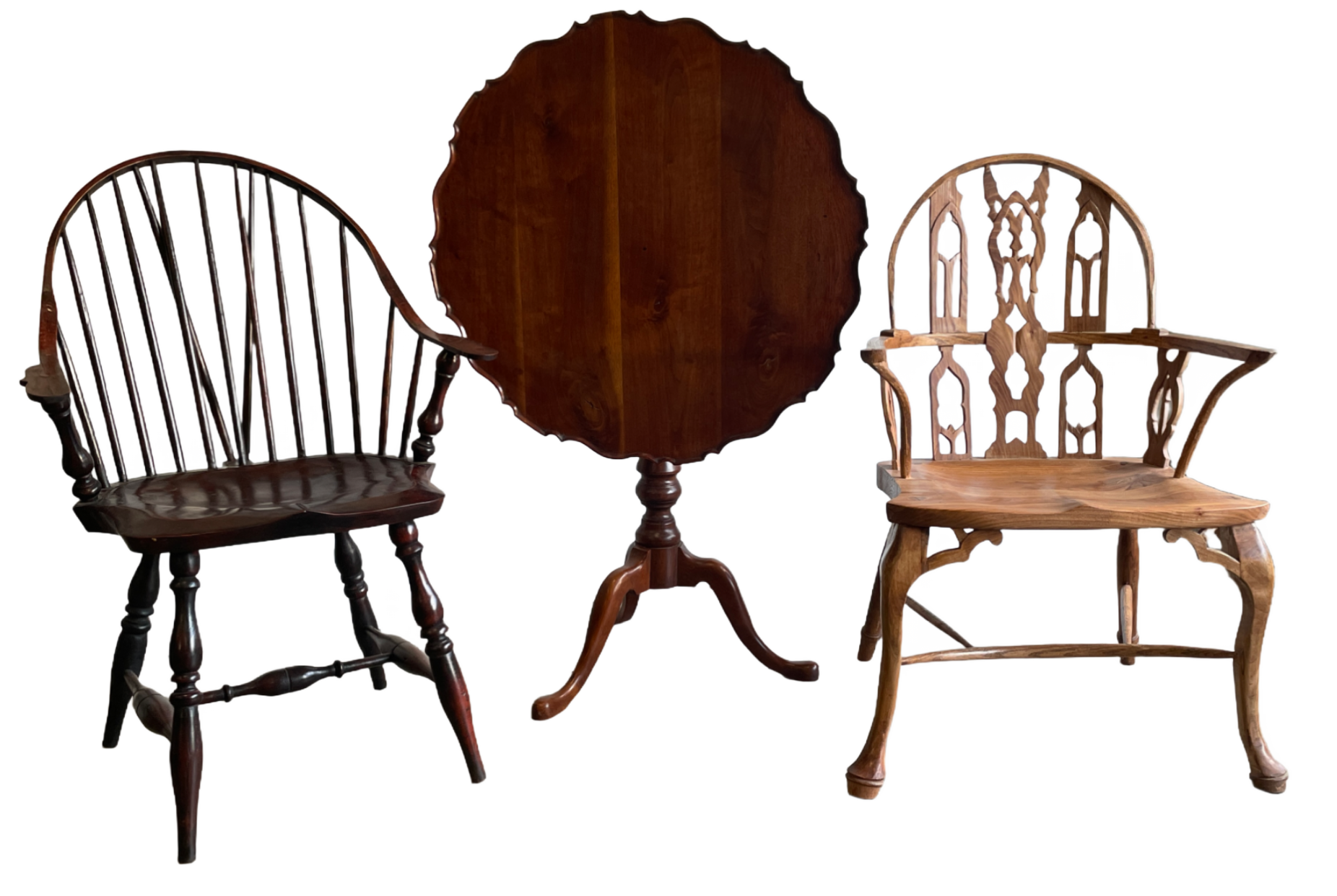
Two windsors and a pie crust table.