
GALLERY
A selection of works showing just some of the historical and original pieces that can be created for collectors.
* Free delivery within 100 miles of Washington, VA *
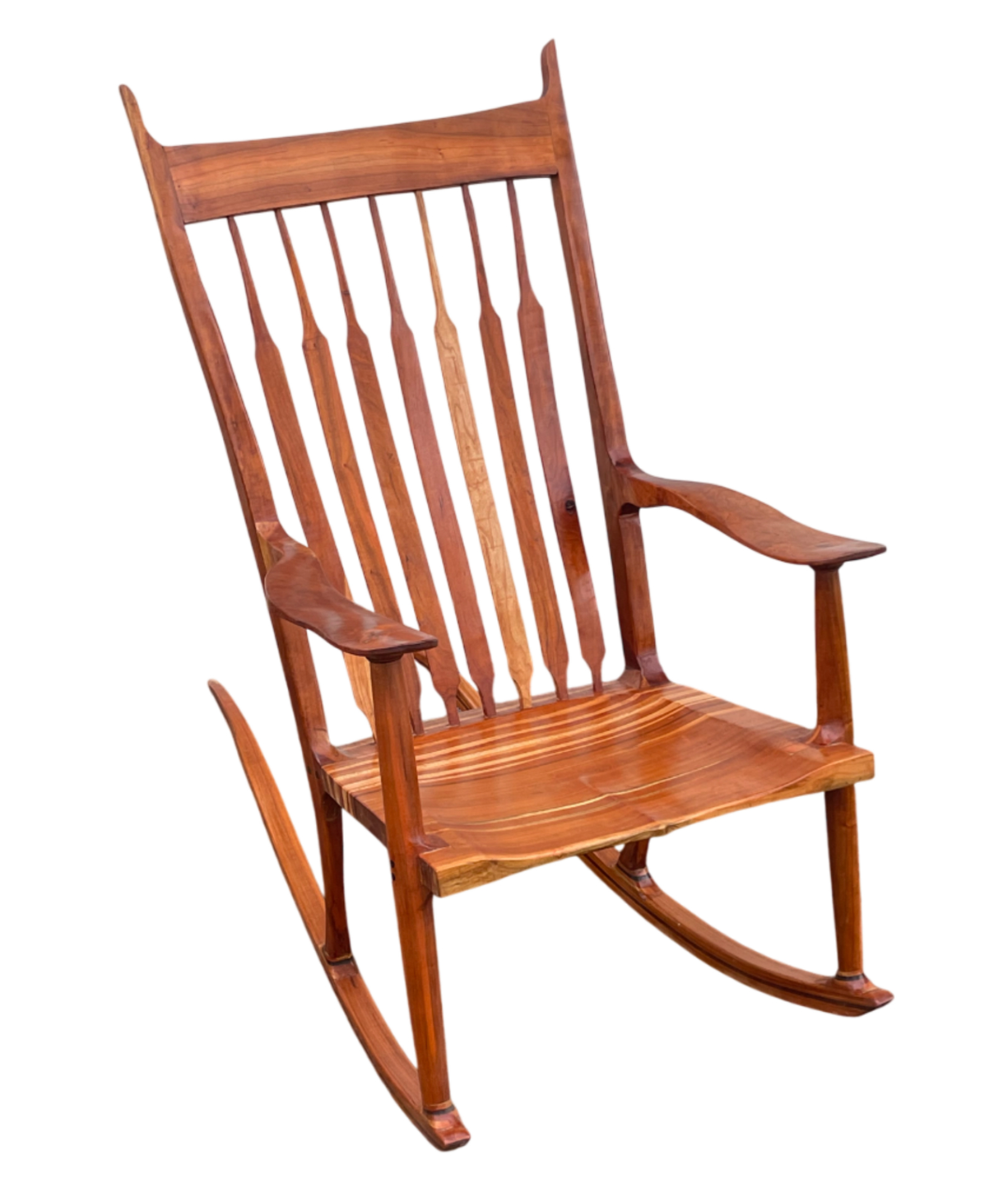
Ambrosia Maple Rocker with Walnut Back Slats
Inspired by mid twentieth century Lebanese immigrant craftsman Sam Maloof who set up shop in California in the 1950s; copying his chairs is now la pièce de résistance among amateur woodworkers.
$2,500
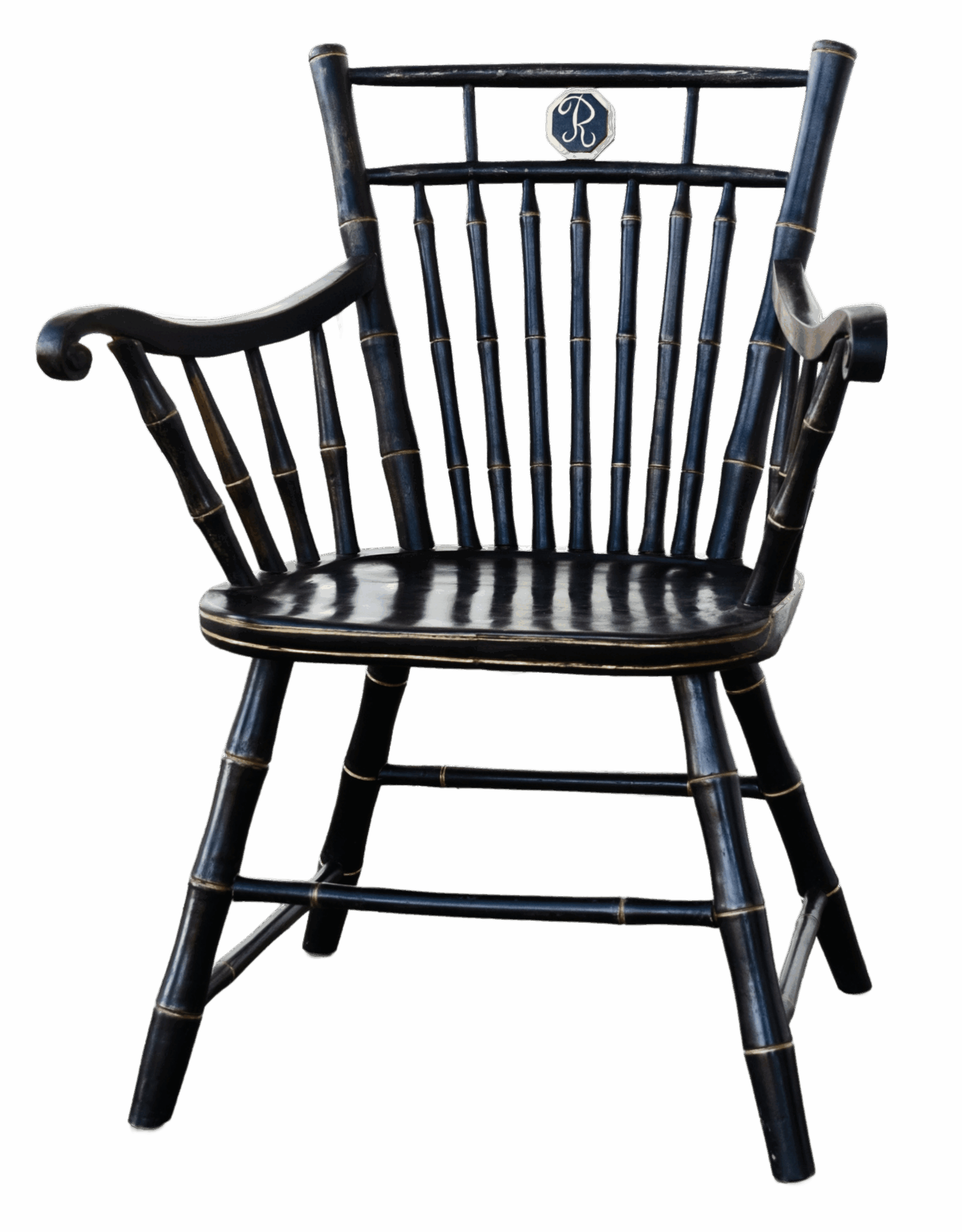
Double Bowed Windsor Birdcage Armchair
Made of cherry, maple and oak and finished in black milk paint with gold ornamentation. Thomas Jefferson had chairs like this made in about 1800 for the entrance hall at Monticello; several are still there.
$1,250
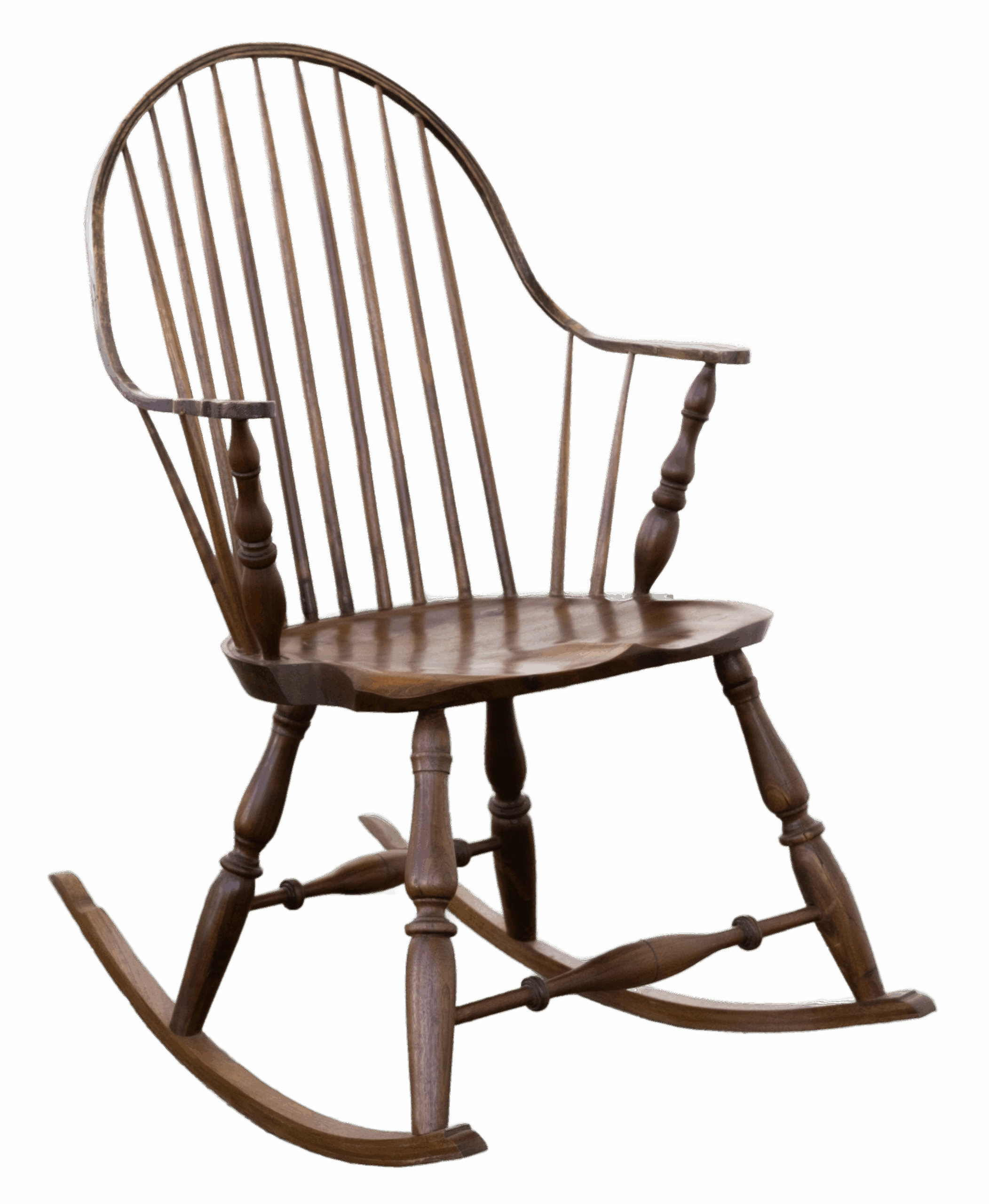
Windsor Rocker
Continuous armed rocking chair made of solid Virginia walnut with steam bent white oak arm-bow fitted into the 13 spindles one at a time. The chair is finished with several coats of hand rubbed tung oil and bees wax. I copies a rocker made in New York 1785-1800, which was probably first made as an arm chair with the rockers added later. The continuous armed rocker is considered the epitome of Windsor style, perhaps the most “American” chair ever made.
$950
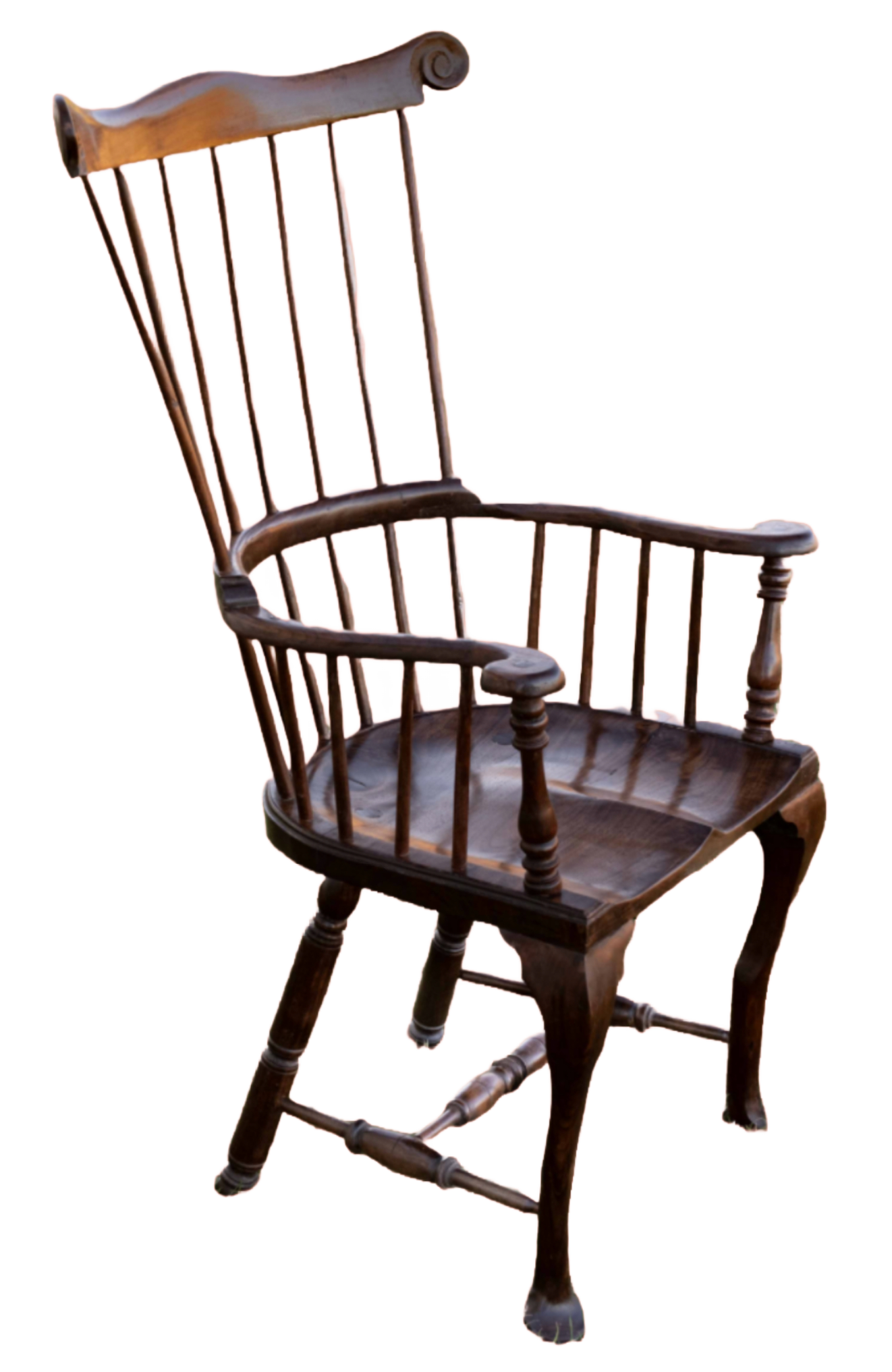
Philadelphia High Back Windsor with Cabriole Legs
Unusual in Windsors and more typically English than American. This is a copy of a chair made about 1740 in Philadelphia, now displayed at the Art Institute of Chicago.
$1,600
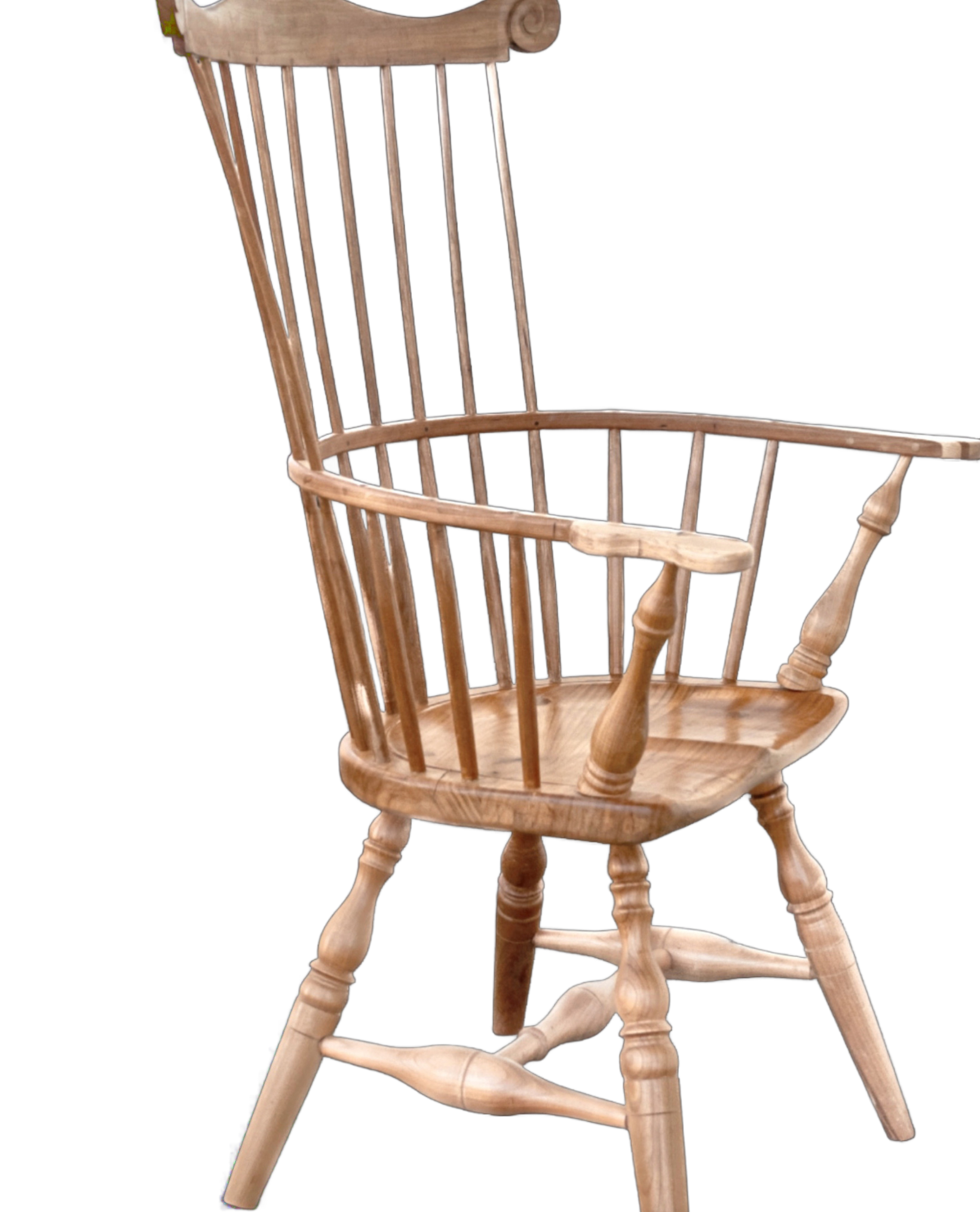
High Back Cherry Comb Windsor
High back comb Windsor made of solid cherry, with carved “ears” on the crest and elegantly turned, Philadelphia style legs and finished with several hand-rubbed coats of tung oil. Chairs like this were made in Philadelphia and New York by the thousands during the last 40 years of the 18th century; many were shipped to England on sailing ships, and together with Windsor “sack backs” were the preferred seating at Independence Hall during the Constitutional Convention in 1787. Most of the ones sat in my Ben Franklin, James Madison and the rest were burned by British soldiers for firewood during the War of 1812.
$950
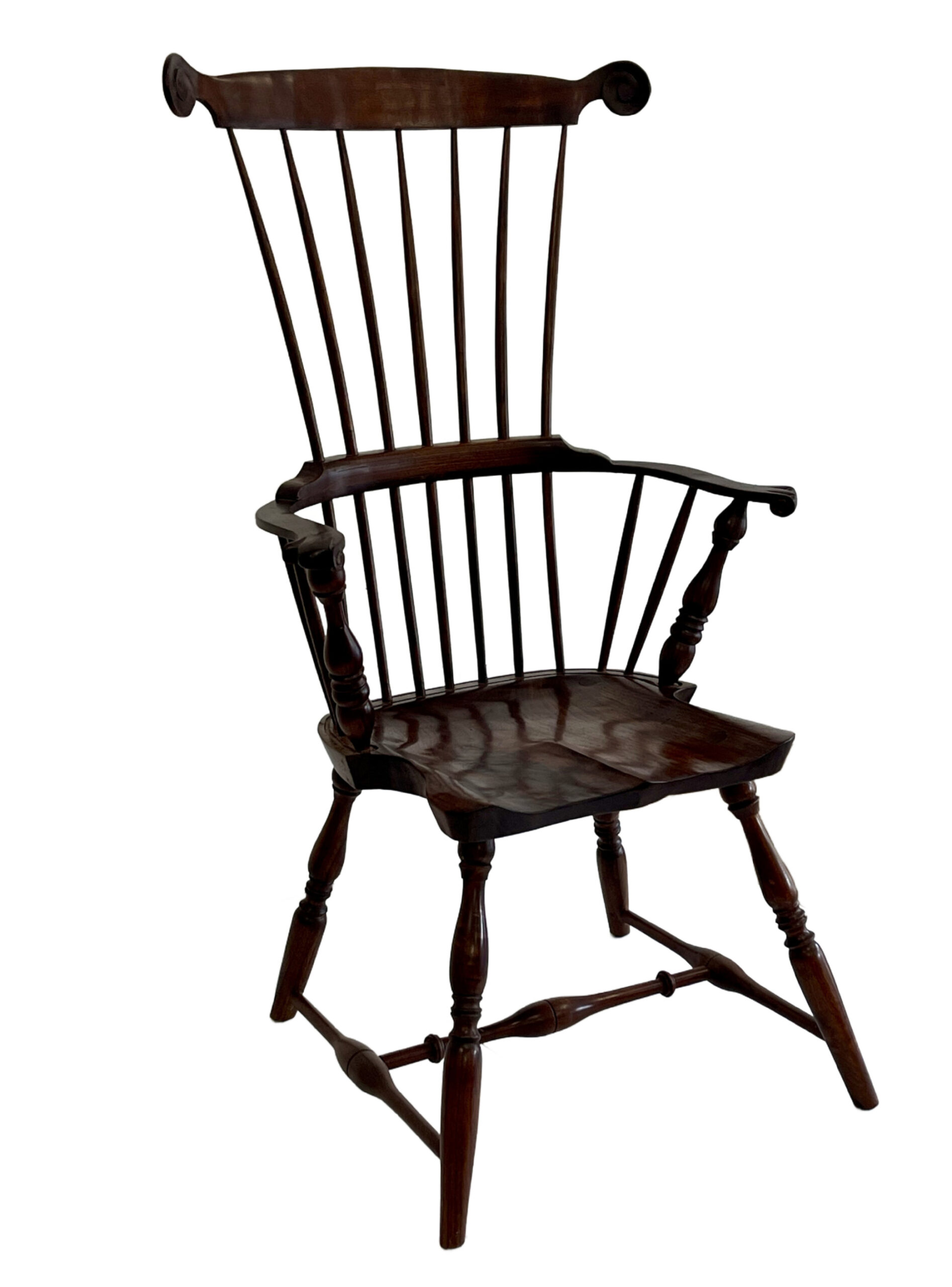
High Back Walnut Philadelphia Comb-back Windsor
Classic comb-back Windsor. The original was made in Philadelphia in about 1765 for a more formal setting than a conventional chair made at that time. Philadelphia was a wealthy city before the revolution, being the center of commerce and trade and the home of many well-educated and successful families who lived in high style and who had a taste for elegant furniture. This chair is made of solid walnut and finished with gel stain oil and wax. The arm is sawed, rather than steam bent, made with three pieces of wood fitted and glued together. The seat is shield-shaped, with turned arm supports and carved knuckles.
$1,500
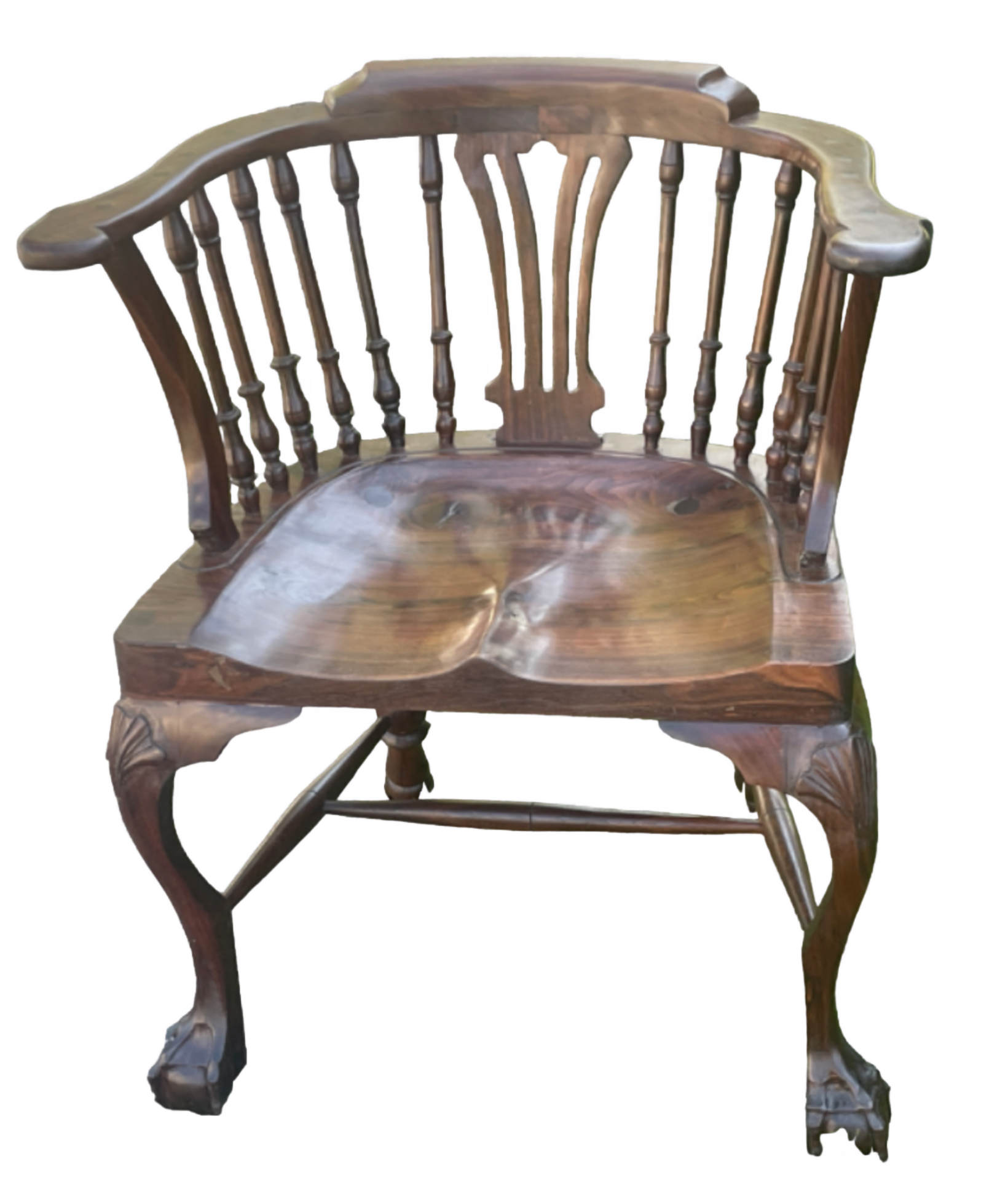
George III Low Back Windsor Chair
With cabriole legs and ball and claw feet. The original was made in England by an unknown maker about 1770 (and is for sale in a high-end antique shop in Tennessee for $19,500), mine is made from solid walnut and finished with boiled linseed oil, shellac and beeswax.
$1,250
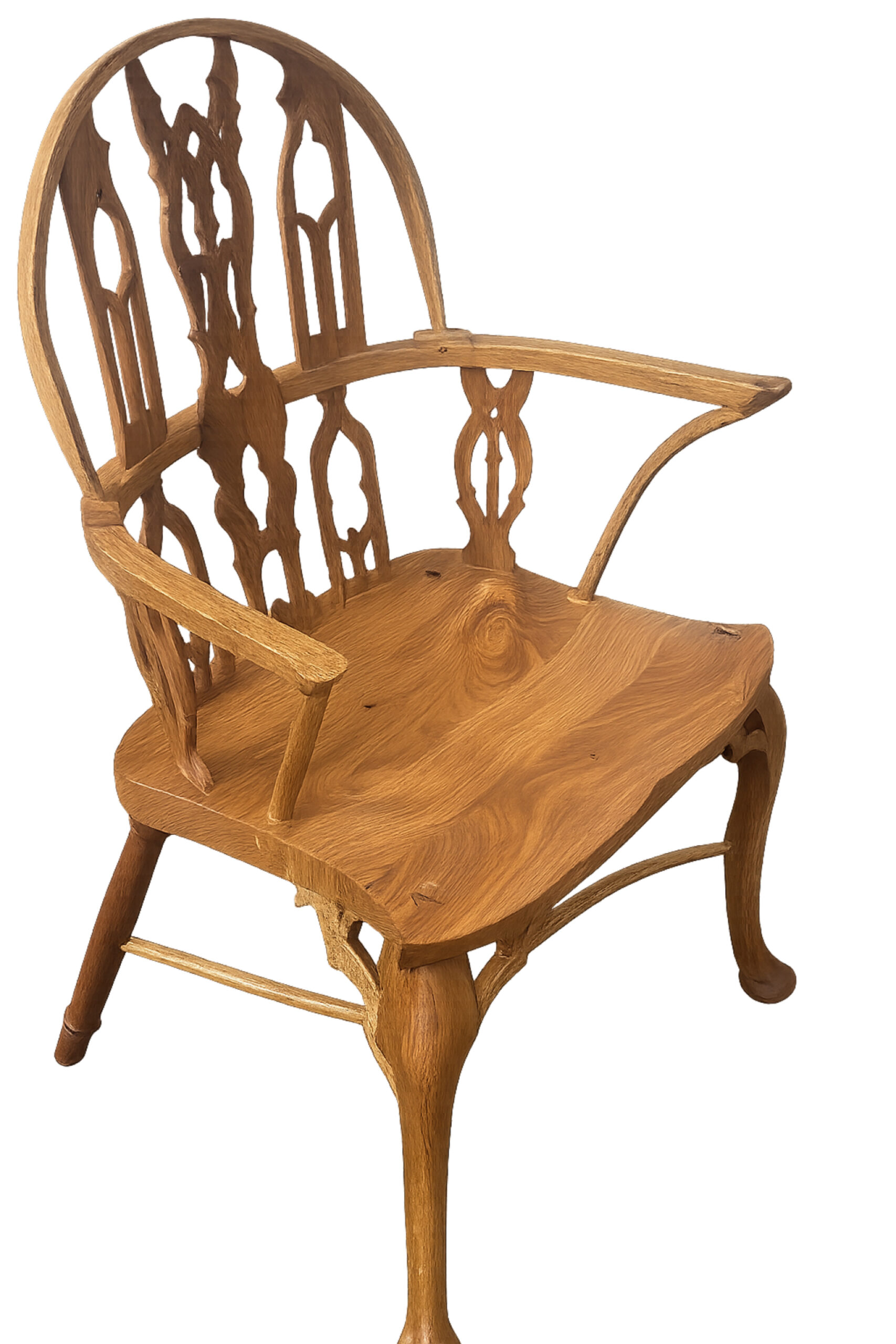
George III “Gothic” Windsor Chair
George III “Gothic” Windsor chair, copy of one made in the Thames Valley about 1740. Yew was the favored wood for these chairs, which is now unavailable, so mine is made of elm, maple, oak and ash and finished with boiled linseed oil. Also known as a Strawberry Hill chair, it was made for
the neo-Gothic mansion by the same name built In Twickenham, London for Horace Walpole in the 1730s who ordered furniture to match the style of the house. A pair of originals, owned by the Rockefeller family, was sold at Christies in 2018 for $336,500. Gothics are considered the most exquisite
and finest design of all Windsor chairs, and the rarest of all the Windsor models.
$1,250
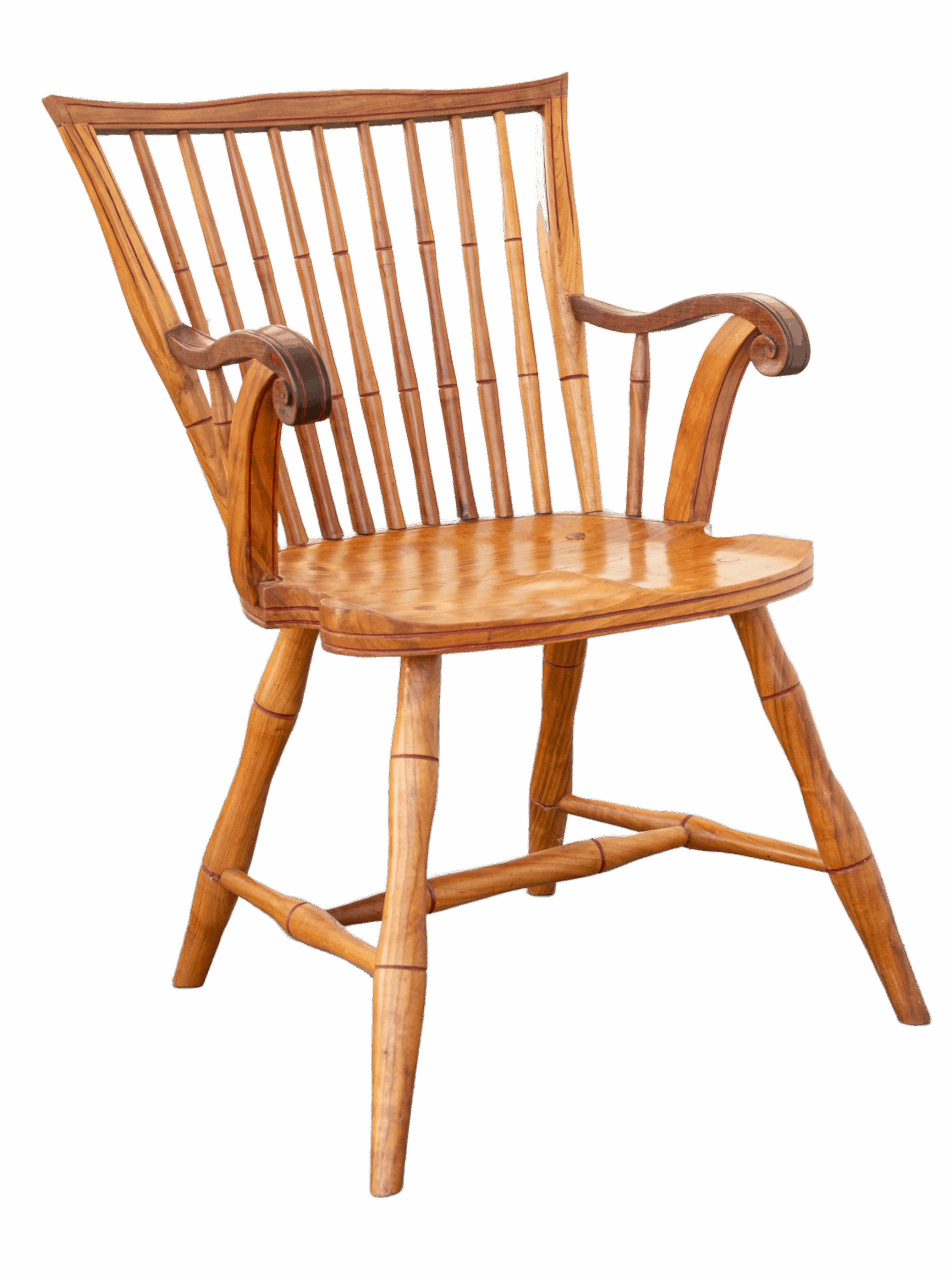
Moon Armchair
Made of cherry with walnut arms. Designed by Thomas Jefferson for his own use, he had several made by the Moon family chair shop in Bucks County, Pa and delivered to Monticello by horse and wagon.
$1,800
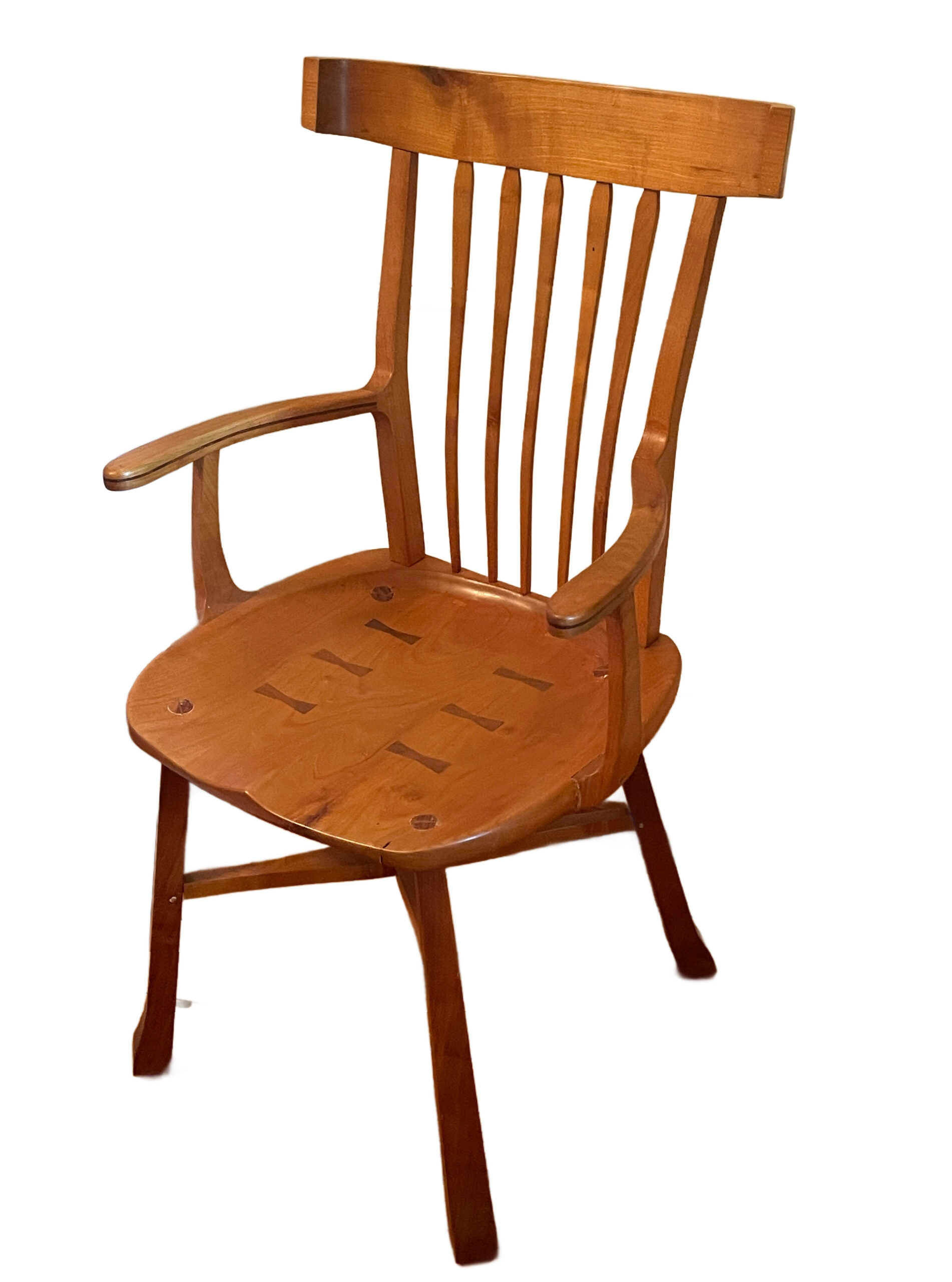
Designed by the Artist
Cherry and walnut chair of my own design. Perhaps it will be famous in its own right, someday.
$1,200
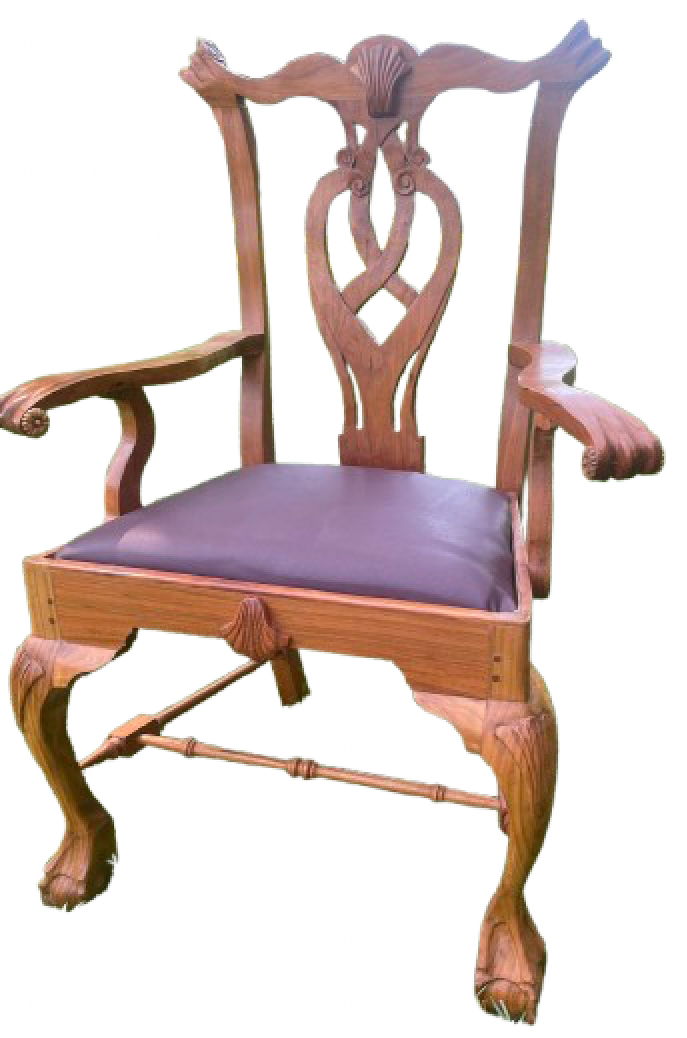
Chippendale Cherry Armchair
With ball and claw feet and carved acanthus leaves, copy of a 1750s chair, of which many were made in both America and England. Thomas Chippendale was a woodworker in London, who designed furniture in the mid-Georgian, English Rococo, and Neoclassical styles and published a book of his designs in 1760 which is still in print.
$800
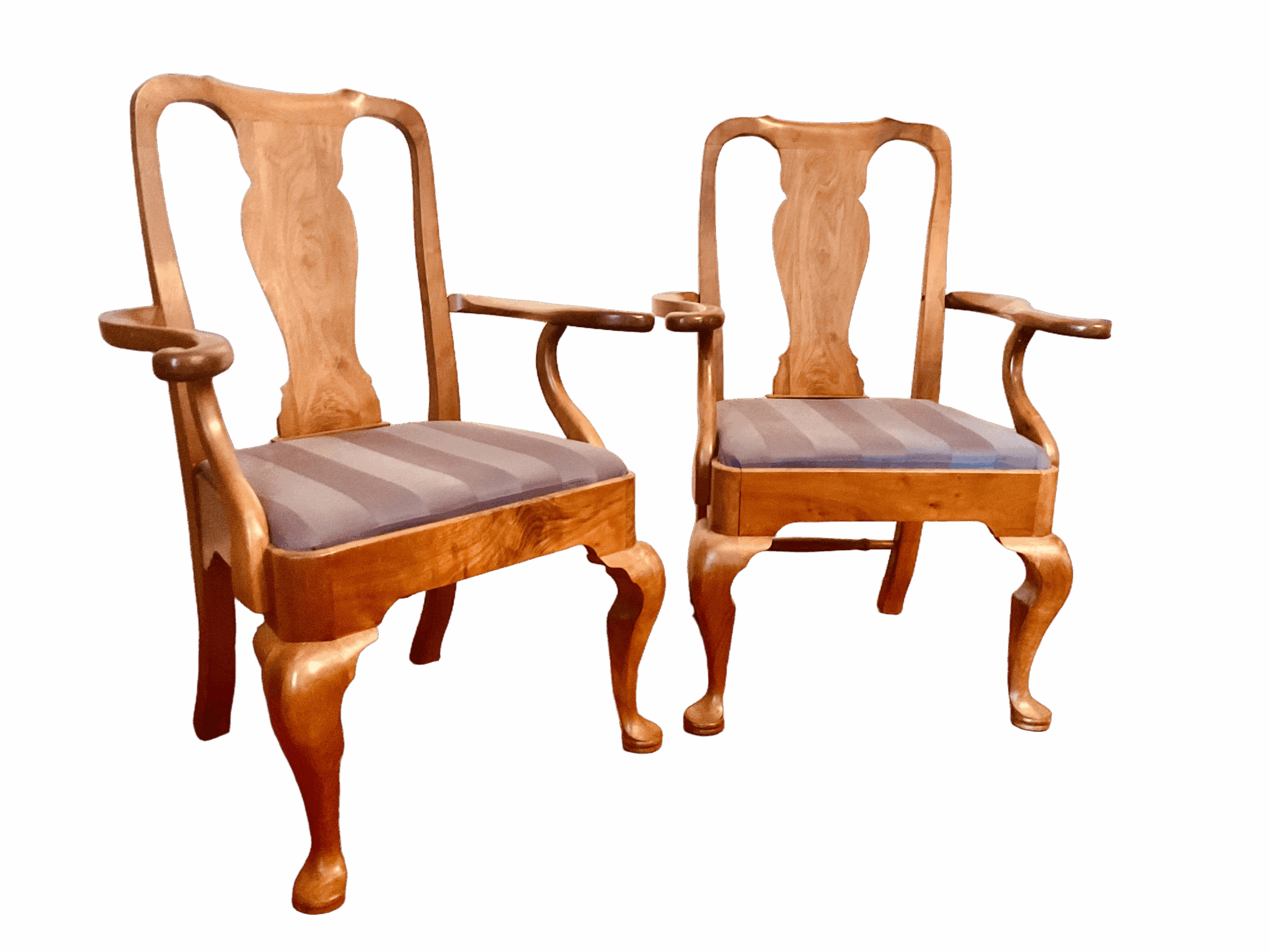
Pair of Walnut Queen Anne Arm Chairs
The set also includes six matching side chairs). The Queen Anne period stretched from about 1720 to 1750, and the style included chests, tables, highboys and, of course, chairs. These were among the first chairs that I made, and were a learning exercise as much as budding creativity.
$1,250 each
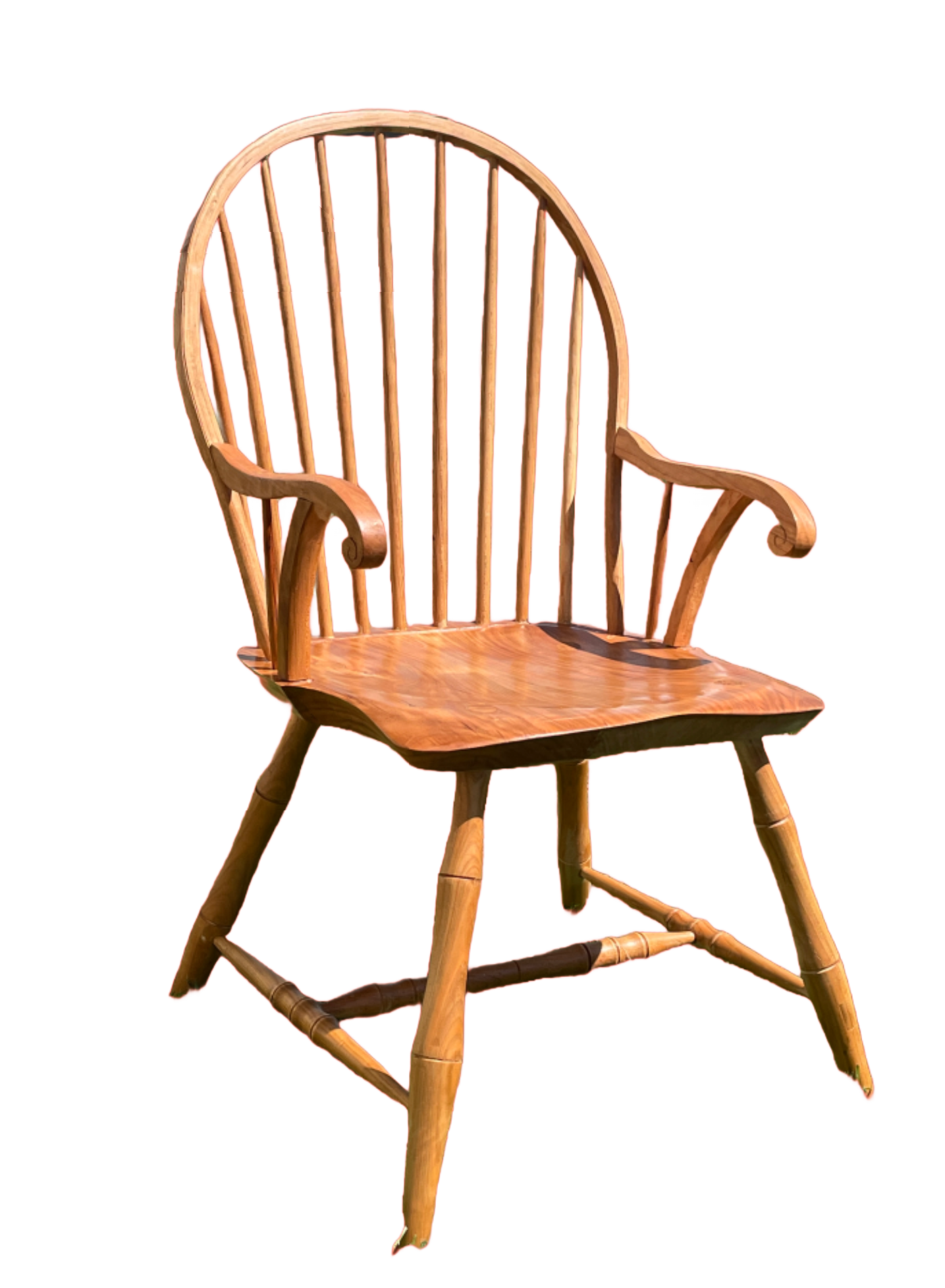
Bow-backed Cherry Windsor Side Chair
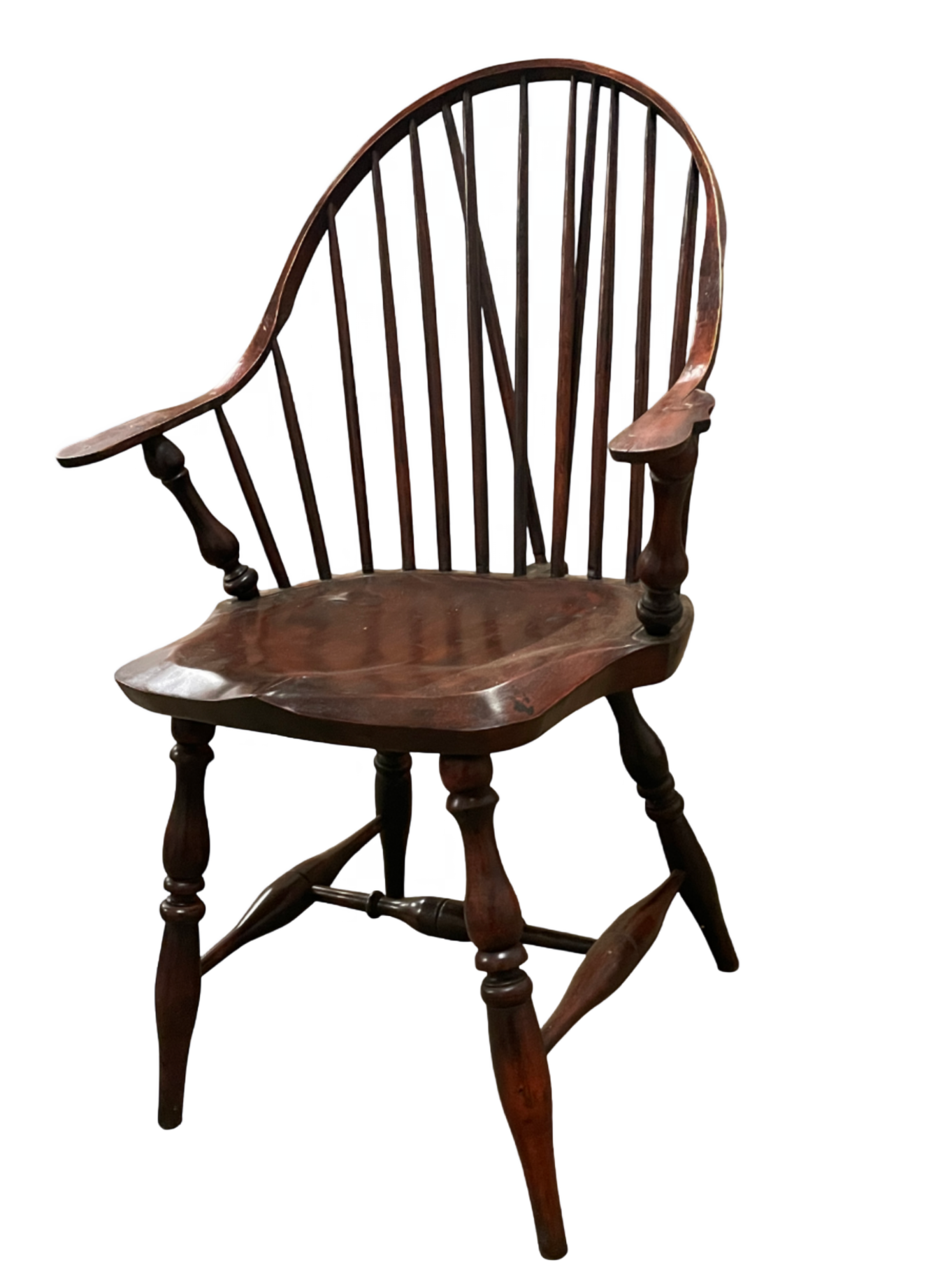
Continuous Arm Side Chair
Continuous arm side chair made of cherry, with oak steam bent arm and reinforcing back spindles. Finished in black over red milk paint with several final coats of shellac and hand rubbed with wax. Copy of a chair made in Providence, Rhode Island in the 1790s.
$850
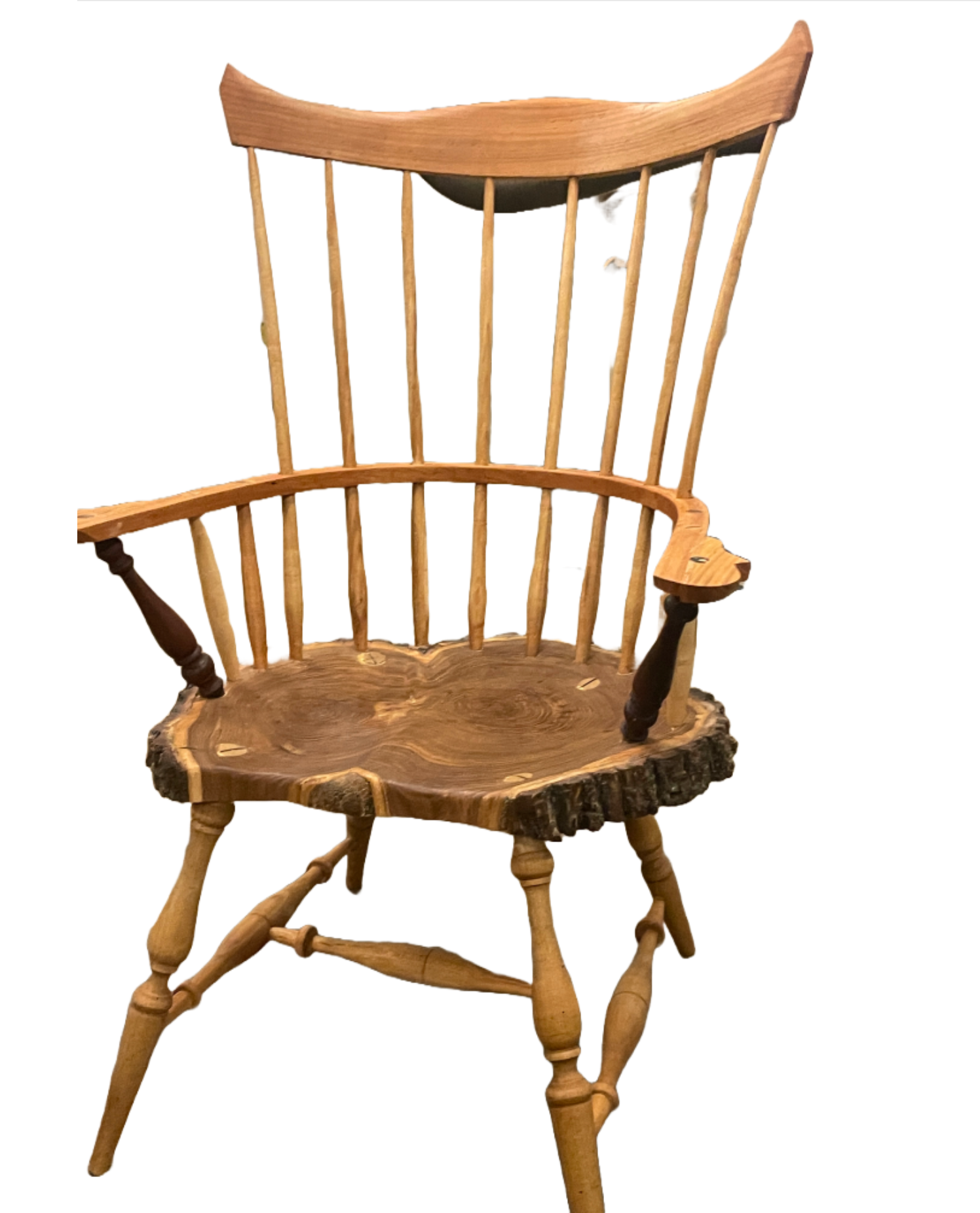
Live Edge High Back Windsor
One-of-a-kind live-edge high back Windsor. The seat is cut crosswise from the crotch of a mulberry tree, the legs are maple, spindles hickory with other parts of walnut and cherry.
$950
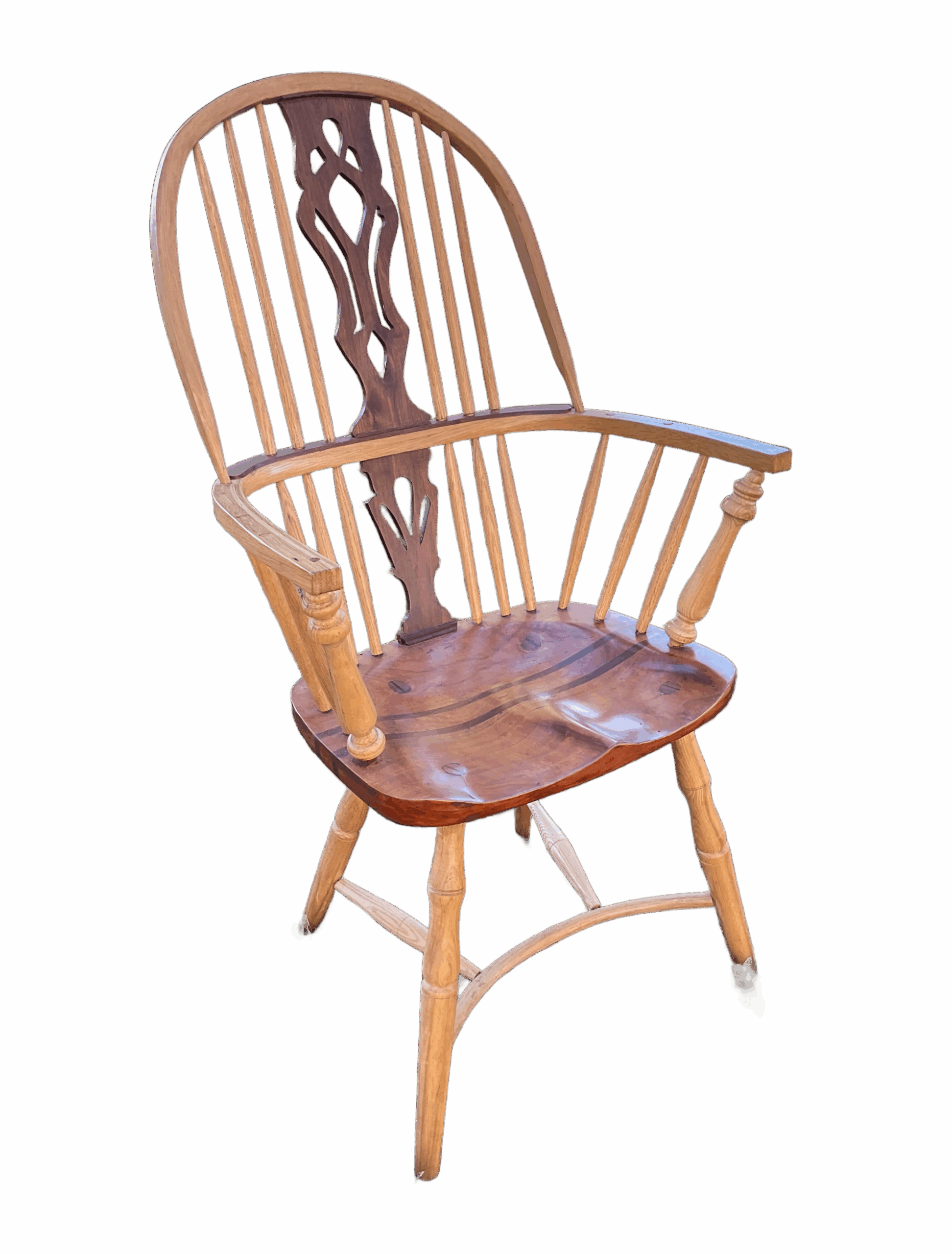
English Windsor Sackback
Made from ash and cherry with a walnut splat, typical of chairs made in England before 1750. Philadelphia craftsmen found the British chairs clumsy and heavy, and devised their own models for the American market.
$1,900
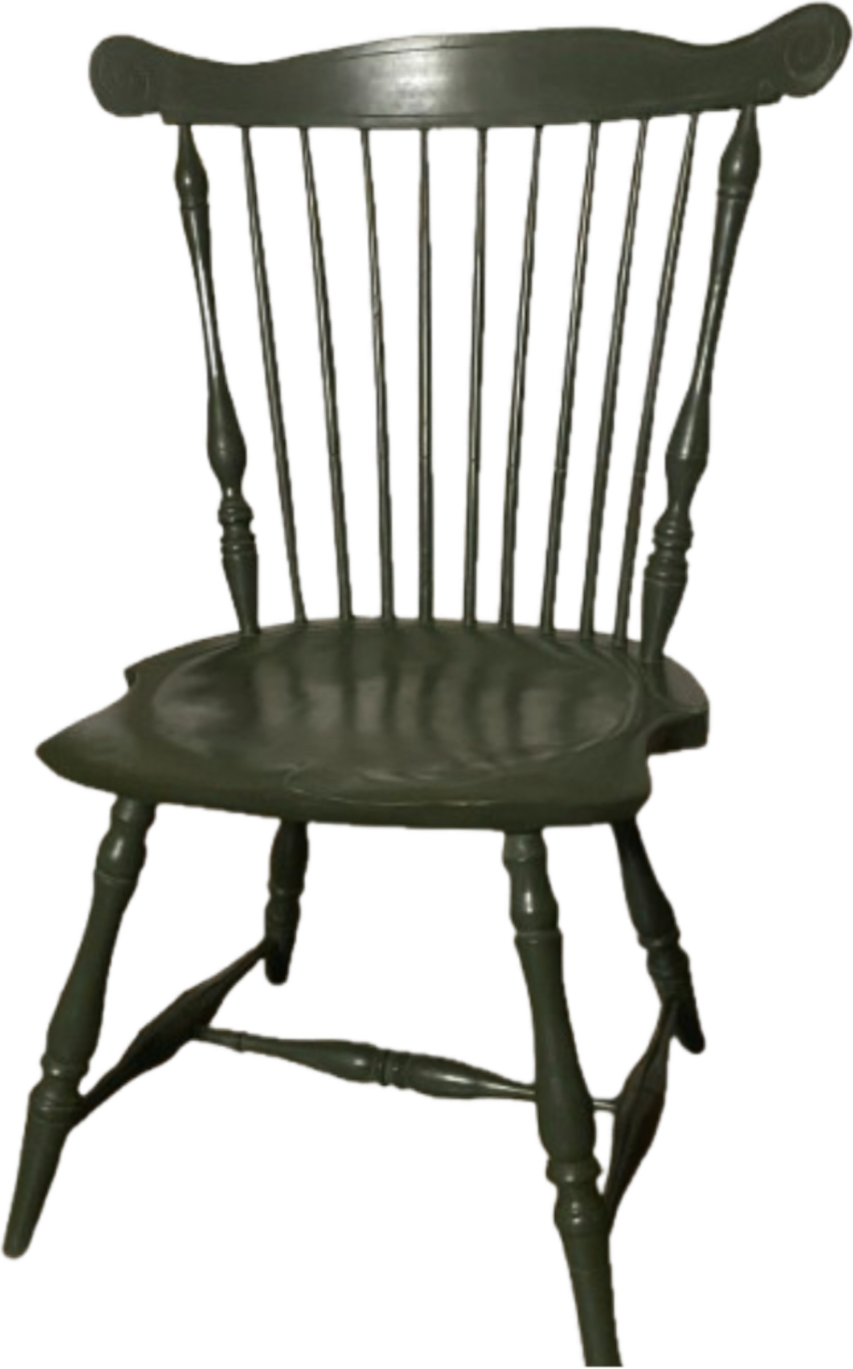
Armless Side Chair
Armless side chair with crest rail made of cherry and maple, painted with Lexington Green milk paint. Copy a chair made in New York, 1780-1800
$750